
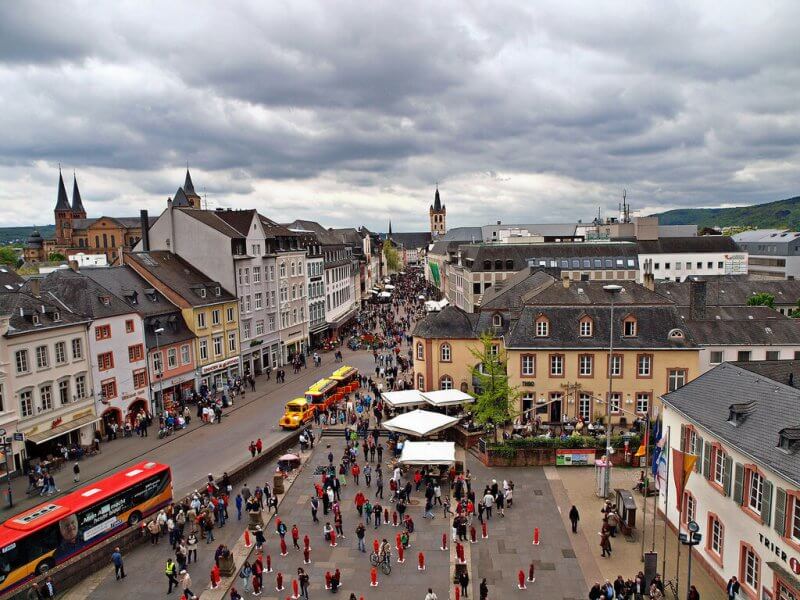
Trier, Germany is a city with an ancient history, capable of interesting every tourist who has come here. Despite the rather advanced age (in 1984, it celebrated its 2000th anniversary), Trier continues to lead a rather active life and is one of the most visited cities in the country.
General information
Trier is the oldest and perhaps the most interesting city in modern Germany. The history of this settlement began in 16 BC, when it was known as Northern Rome and Augusta Treverorum. The current name was acquired much later, around the 3rd century AD.
Today, Trier is a major administrative center in Germany, located on the southern bank of the Moselle River in Rhineland-Palatinate. As of 2017, its population is slightly over 110,000. The city is home to a large number of students, as it boasts several universities and numerous architectural landmarks associated with ancient Roman civilization.
Attractions
Most of Trier’s attractions are located in the Old Town, a picturesque area surrounded by shady alleys, the Zurlaubener Ufer promenade, and the picturesque Moselle River. This area is a favorite among both locals and visitors to the city. Let’s take a walk through it.
Porta Nigra
The best way to get to know Trier is to start by exploring the Black Gate, which is the city’s most iconic landmark. Built in 180 AD during the Roman Empire, the Black Gate is one of the oldest defensive structures in Germany that has survived to this day. In ancient times, the Porta Nigra was part of a high fortress wall and, along with three other gates, served as the entrance to the city. The gate was approximately 30 meters tall and 36 meters wide!

Initially, the Porta Nigra in Trier was completely white, but over time, the stone used to build the gate has darkened to the point where it now matches its name. However, this is not the most impressive aspect of the gate. What truly stands out is the method used to construct it. You may find it hard to believe, but the 7,200 stone blocks, weighing a combined total of over 40 tons, are held together using liquid tin and thick iron brackets! The latter were partially looted by medieval marauders, but despite this, the structure managed to survive completely.
Historians claim that this incredible resilience is due to the personality of Simeon, a hermit monk who lived in Porta Nigra from 1028 to 1035 and was buried at their base. After the elder’s death, a church was added to the gate, named in his honor. However, in 1803 it was destroyed by Napoleonic troops, as a result of which the structure took on its original appearance. Today it houses a museum.

- Address: Simeonstrasse 60 | Porta-Nigra-Platz, 54290 Trier, Germany.
- Opening hours: Sunday to Saturday, 09:00 to 16:00.
Cost of the session:
- Adults – 4€;
- Children aged 6-18 – 2.50€;
- Children under 6 years old can attend for free.
St. Peter’s Basilica

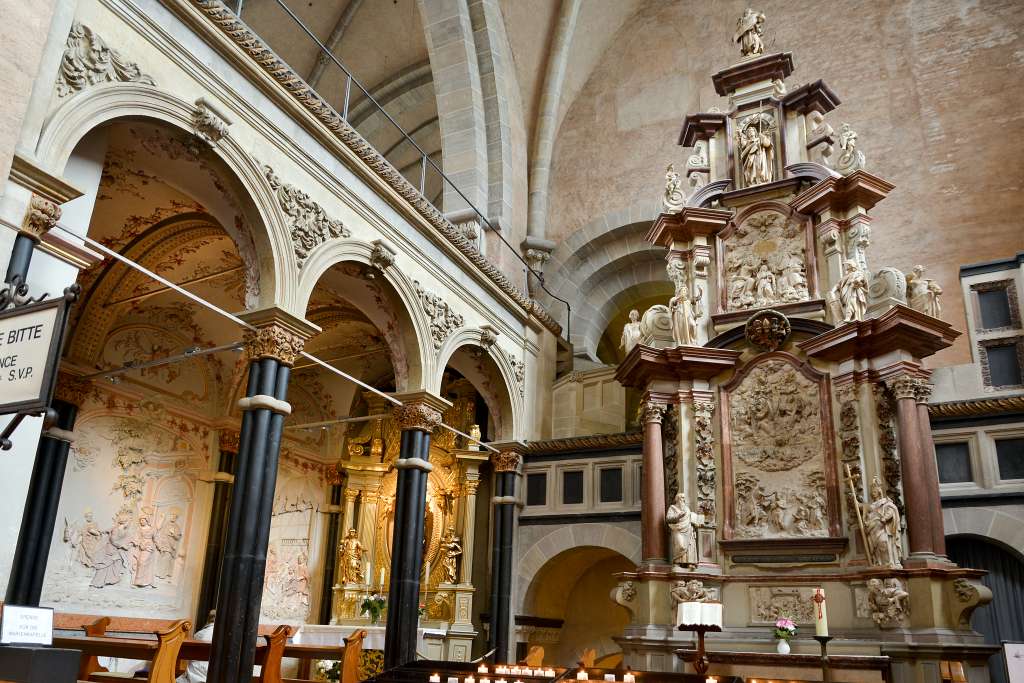
St. Peter’s Cathedral or the Trier Cathedral of Trier, whose construction began in 326 on the initiative of Emperor Constantine, is one of the oldest religious buildings in Germany. The Romanesque-style cathedral was built on the site of a royal palace donated by Queen Helena to the Trier bishopric.
After the devastating Norman raid in 882, the ruined church was forgotten for many years. It was only in the mid-18th century that local bishops decided to not only restore the cathedral’s style but also add baroque elements to its interior. This led to the creation of an altar and a sculpted barrier. The cathedral underwent another restoration in the 1970s. Like other buildings in the central part of the city, it was heavily damaged during the Second World War and needed to be completely reconstructed.
Today, St. Peter’s Cathedral is one of the most important landmarks in Trier. Its reliquary houses the chiton of the Messiah, one of the most sacred objects in Christianity. Additionally, visitors can admire the sandal of St. Andrew, the ark containing the head of St. Helena, and the chain that bound St. Peter.
Address: Domfreihof 2, 54290 Trier, Germany.
Opening hours:
- 01.11 – 31.03: daily from 06:30 to 17:30;
- 01.04 – 31.10: daily from 06:30 to 18:30.
Visits are not allowed during church services.
Main Market Square
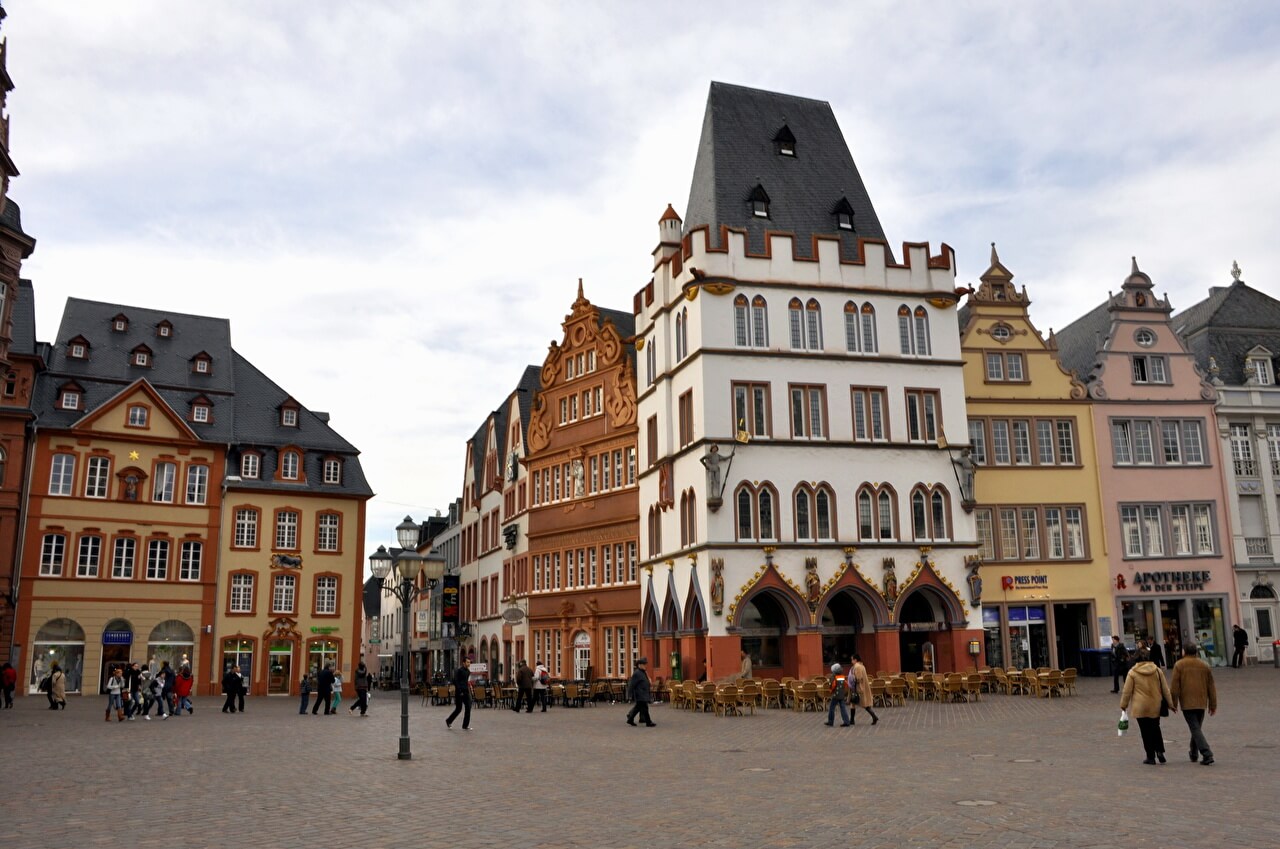
The list of the most popular sights in Trier, Germany, continues with the Hauptmarkt, the central city square located at the intersection of important commercial streets in the ancient city. The main symbol of this place is the Market Cross, which was erected in 958 by order of Archbishop Henry I. The structure is a stone column with a crucifix, symbolizing the dominance of the church and indicating the special privileges of Trier. In addition, the Market Cross marks the center of the city, and the sundial located on one of the columns provides accurate time information.
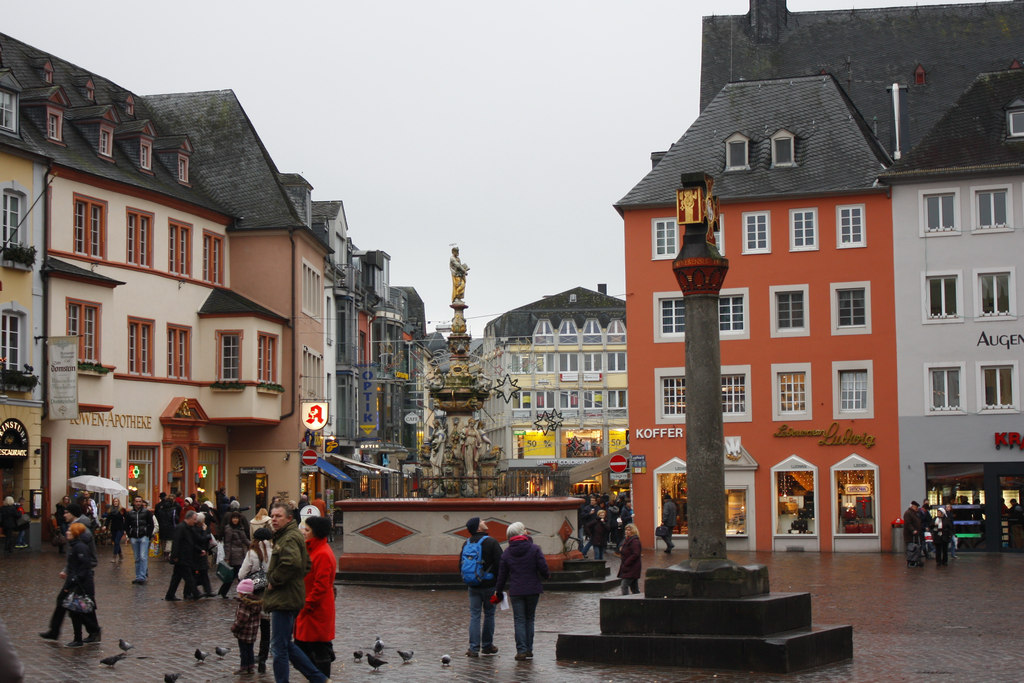
Another highlight of the central square in Trier is the Renaissance fountain of St. Peter, which was built in 1595. The fountain features metaphorical female figures representing modesty, strength, wisdom, and justice, and is topped by a sculpture of Saint Peter, the patron saint of Trier.
A small part of the historical Hauptmarkt district has been preserved to this day, with its brightly painted old houses and a small street leading to the medieval Jewish Quarter.
Address: 54290 Trier, Rhineland-Palatinate, Germany.
Church of Our Lady
The Church of Our Lady of Trier, which stands next to the Church of St. John the Baptist. Peter, can be called the oldest Gothic building in modern Germany. At the heart of this monumental structure is a part of the ancient Roman basilica, built under the Emperor Constantine. The new building was designed by architects from Lorraine, who gave it the style of the popular Gothic style at that time.

For several centuries, members of the highest church hierarchy in Trier were buried in the Liebfrauenkirche, and over time, hundreds of crypts accumulated there. This feature could have easily turned the Church of the Virgin into one of the world’s most renowned bone repositories, but during Germany’s war with Napoleonic France, most of these burial sites were destroyed.
The exterior of the Liebfrauenkirche is equally impressive, resembling a rose with 12 petals and a semi-circular apse. The interior of the church is adorned with statues, historical monuments, and tombstones that have stood for thousands of years. The most valuable of these have been relocated to a local museum and replaced with exact replicas. Another notable feature of the Liebfrauenkirche is the covered gallery that connects the Church of Our Lady to the Cathedral, creating the Triumphal Arch in Trier.
Address of the attraction: Liebfrauenstr. 2, 54290 Trier, Rhineland-Palatinate, Germany
Opening hours:
- Mon., Wed., Fri.: from 08:00 to 12:00;
- Tue., Thu.: from 08:00 to 12:00 and from 14:00 to 16:00.
Rhineland Museum
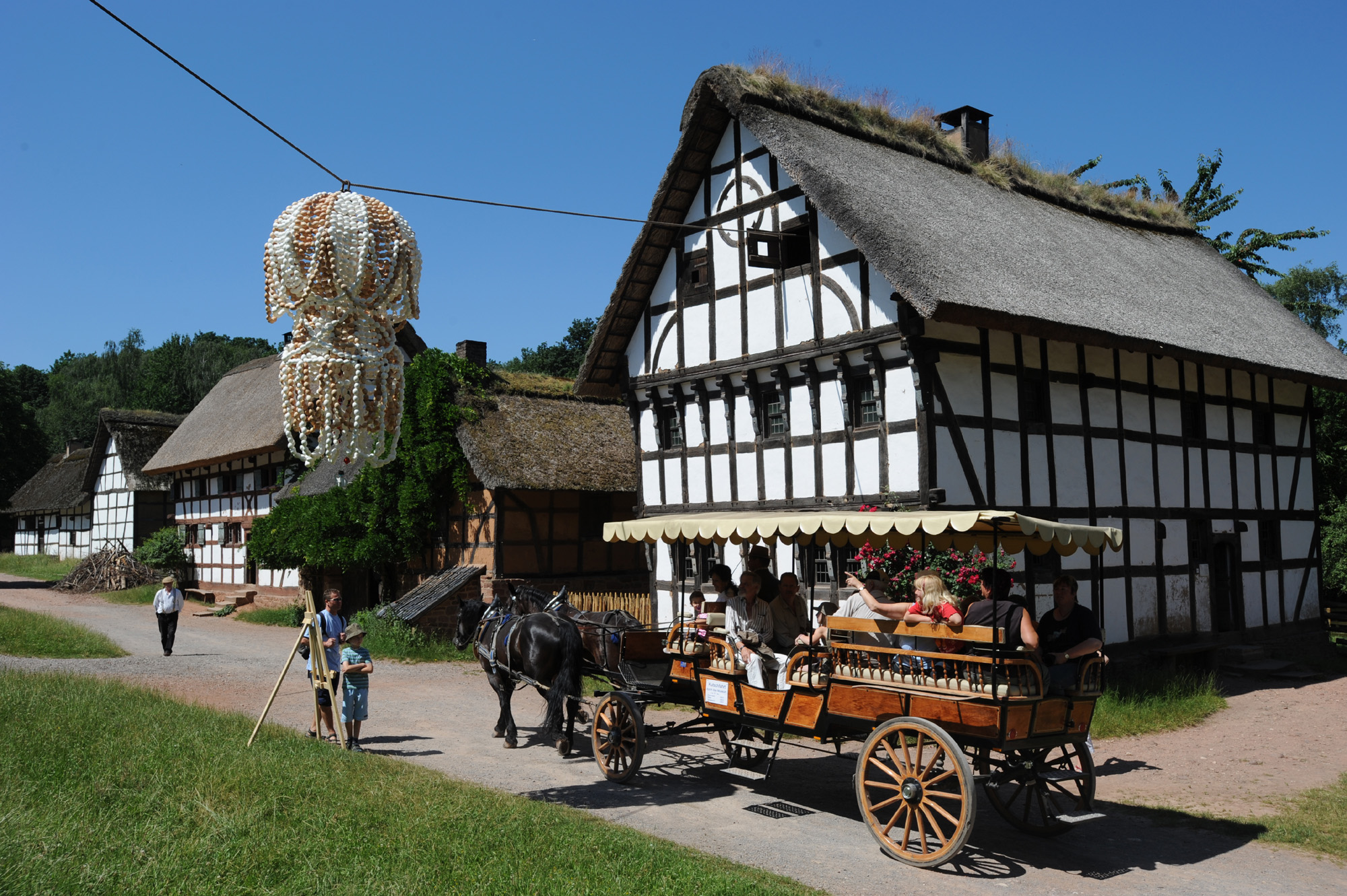
The Rhine Museum of Local Lore, founded in 1877, is one of the largest and most significant archaeological panopticums in Germany. Its exhibition halls contain numerous artifacts that tell the story of life along the banks of the Rhine. Most of these artifacts date back more than 200,000 years. However, perhaps the most significant part of the collection is the archaeological findings that date back to the Roman period of Trier’s development.
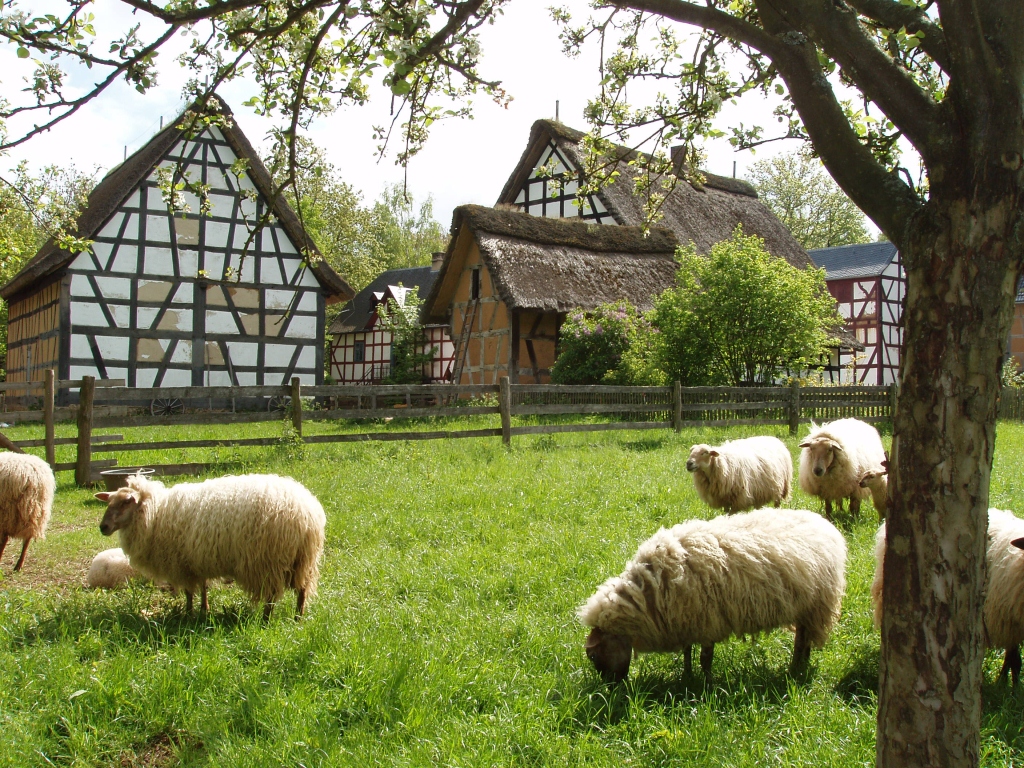
Walking around the exhibition grounds of the Rhineland Museum, which covers an area of 4,000 square meters, you can see rare and truly unique specimens. Among them are fragments of stained glass from the Cathedral, medieval tools made of stone and bronze, weapons and jewelry from Frankish tombs, Celtic noble tombs, and early Christian monuments and epitaphs. A large collection of ancient mosaics, coins, ceramics, paintings, household items, and works of ancient decorative art also deserves attention.
- Address: Weimarer Allee 1, Trier.
- Opening hours: Tuesday-Sunday, 10:00-17:00.
Cost of the session:
- Adults – 8€;
- Children aged 6-18 – 4€;
- Children under 6 years old can attend for free.
St. Constantine’s Basilica

Looking at the photos of Trier, you will surely notice another important landmark of this city. It is about the Basilica Aula Palatina, built in the 4th century in honor of Emperor Constantine and is the largest preserved hall of the ancient period.
The Basilica of Constantine, often referred to as the Palatine Hall, is a rectangular building that was originally used for hosting guests. Over time, the basilica’s appearance and purpose evolved. In the 5th century, the Aula Palatina was destroyed by Germanic tribes, and its apse was transformed into a tower for the bishop’s apartments. Centuries later, the basilica became part of a new palace, and in the early 19th century, it was converted into a Protestant church.
Address: Konstantinplatz 10, 54290 Trier, Germany.
Imperial Baths

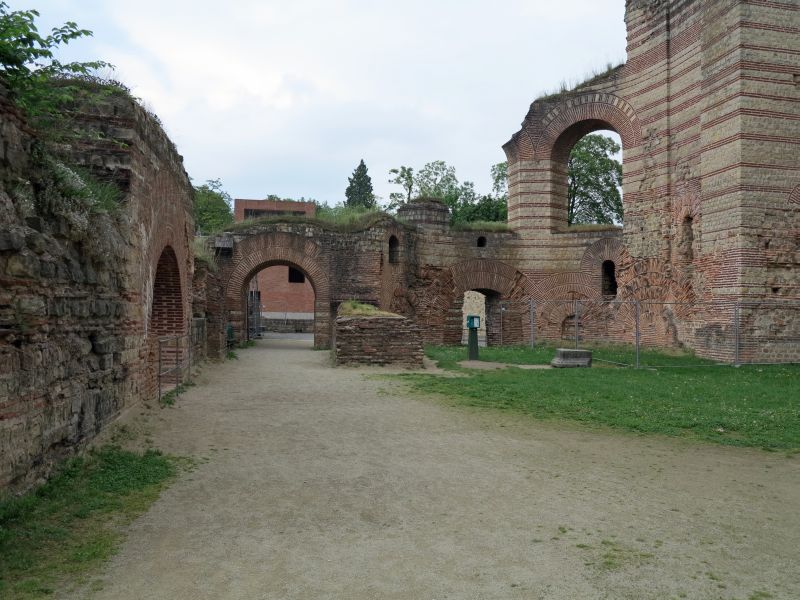
A visit to the sights of Trier, Germany, is unlikely to be complete without a stroll through the Imperial Baths. The ruins of these once-grand baths are yet another testament to the grandeur of Northern Rome. With its partially preserved walls reaching up to 20 meters in height, this structure is one of the largest of its kind.
The construction of the Imperial Roman Baths began in the 3rd century and was completed during the reign of Constantine the Great. Surprisingly, they never served their intended purpose and were later converted into a forum.
After the fall of the Roman Empire, the baths were converted into a cavalry barracks, and later became part of the fortress wall that protected the entrance to Trier. Today, the area of the imperial baths is home to an archaeological park, and it often hosts various exhibitions.
Address: Weberbach 41, 54290 Trier, Federal Republic of Germany.
Opening hours:
- November – February, from 09:00 to 16:00;
- March, October: from 09:00 to 17:00;
- April – September: from 09:00 to 18:00.
Cost of the session:
- Adults – 4€;
- Children aged 6-18 – 2.50€;
- Children under 6 years old can attend for free.
Roman Bridge
The Roman bridge in Trier, which has been used for crossing the Moselle River for 2,000 years, was built between 144 and 152 AD. It was preceded by a wooden viaduct, whose stone supports can still be seen when the water level drops. The longevity of these structures is due to their durable construction materials. It is said that the supports were lined with basalt slabs extracted from the crater of an extinct volcano. The bridge was originally covered with thin wooden planks, but they were eventually replaced with stone.
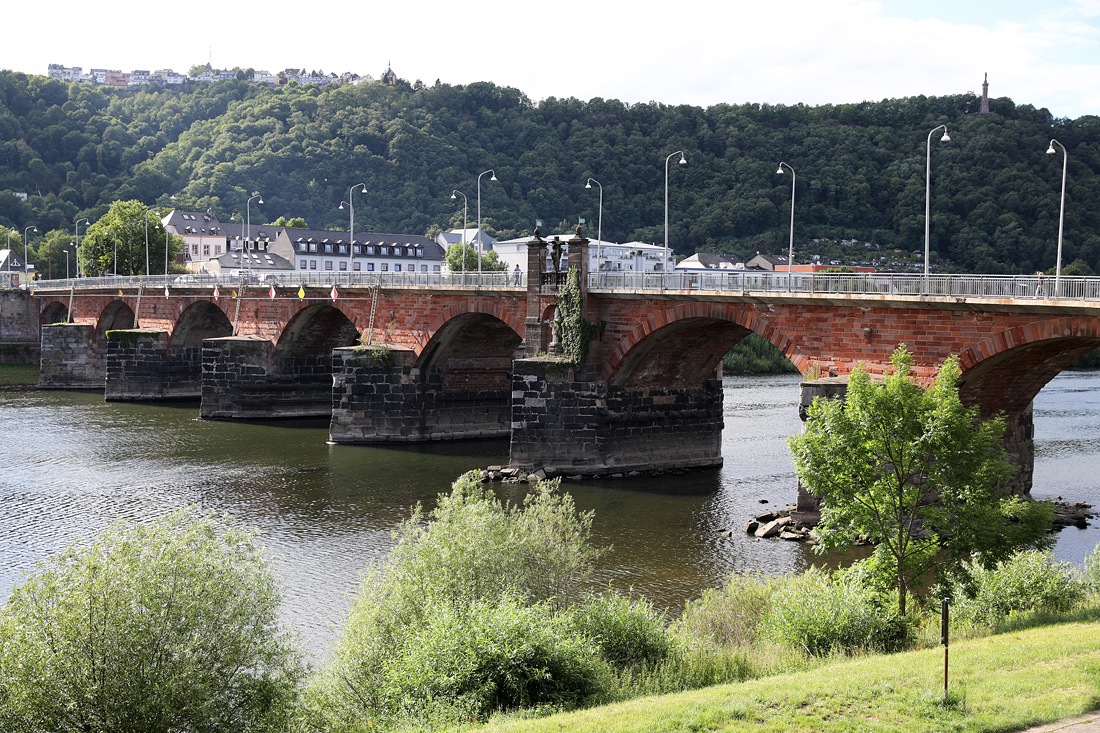
In 1689, the Roman Bridge was blown up by Napoleon’s army, but by the early 18th century, it had regained its original appearance. It was not only rebuilt but also adorned with a statue of St. Nicholas and a depiction of the Christian crucifixion. However, the Second World War had no impact on this significant historical landmark. For unknown reasons, the retreating German forces left it intact.
In the post-war period, active archaeological excavations were carried out in the area of the Roman Bridge. Currently, all nine ancient Roman pillars of this structure continue to perform their primary function of supporting a busy pedestrian and vehicular road located 15 meters above sea level.
Address: Romerbrucke, 54290 Trier, Republic of Germany.
Food in the city
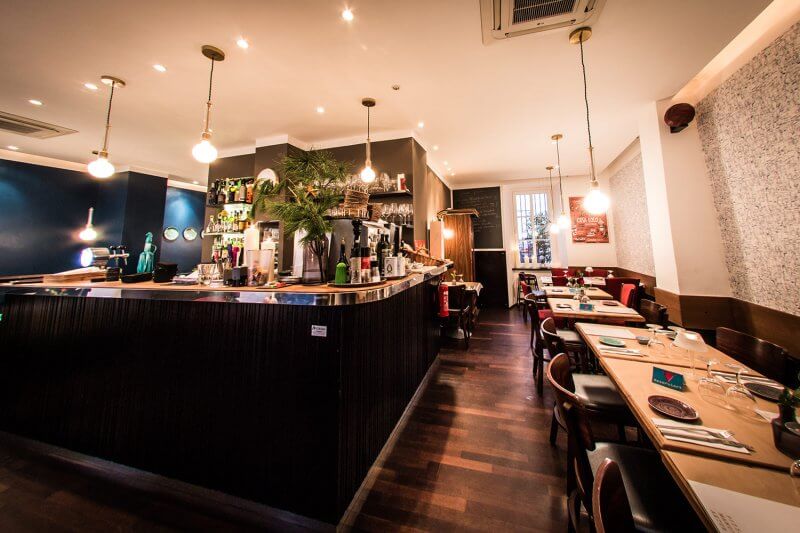
A trip to Trier would not be complete without visiting the local cafes and restaurants, which offer a wide variety of dishes and provide high-quality service. Some of the most popular establishments in the city include Kartoffel Restaurant Kiste, Kasefalle – Das Kase-Restaurant, Pizzamanufaktur Pellolitto, and Coyote Cafe Trier.
- As for prices, the estimated cost of lunch or dinner for two people is: 25€ in an inexpensive restaurant,
- 48€ — in a mid-range establishment,
- 14€ — in fast-food restaurants like McDonald’s.
Where to stay?
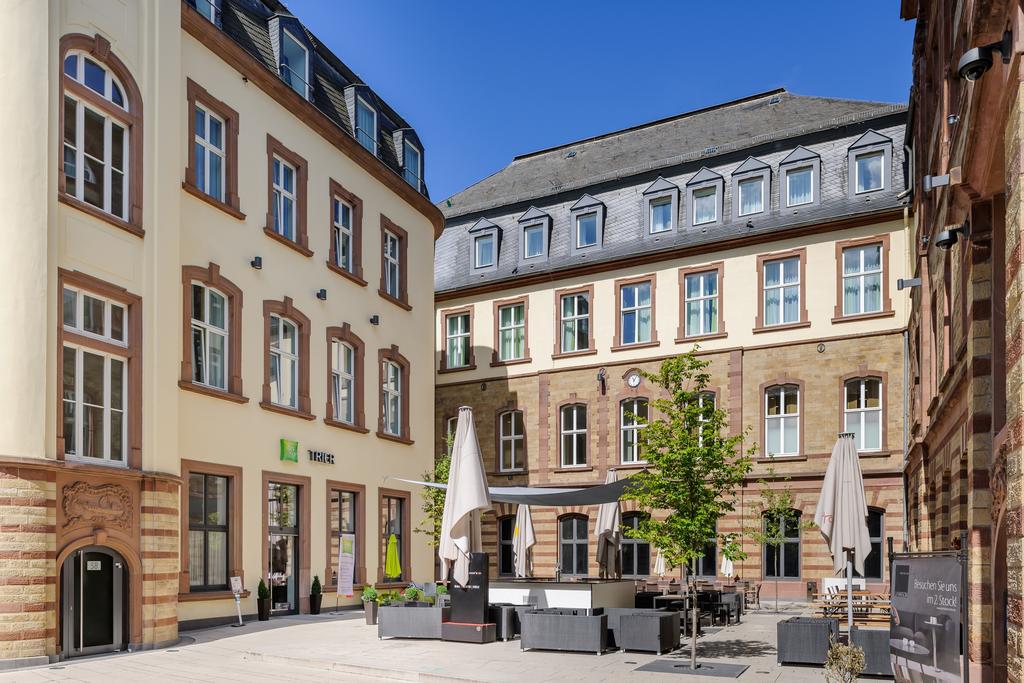
The city of Trier in Germany offers a wide range of accommodation options at various price levels. A double room in a 3-star hotel costs between 60 and 120 euros per night, while a 4-star hotel costs between 90 and 140 euros per night. Apartments can also be rented for as low as 30 euros.
Interesting facts
Finally, here are some interesting facts about the history of Trier.

- The famous economist and writer Karl Marx was born here.
- The fountains of Trier are considered some of the most beautiful in Germany.
- For a long time, Adolf Hitler, the Führer of the Third Reich, was an honorary citizen of the city.
- On one of the houses, you can see an inscription that says that Trier was founded 1,300 years before Rome. This was a way for the locals to “tease” their main rival.
- In addition to the traditional municipal transport, a fun train runs through the city streets, departing from Porta Nigra and stopping at all the important landmarks. The trip lasts for half an hour.
- Trier has 9 sister cities located on 3 continents.
- The city is included in the UNESCO World Heritage List.
Trier, Germany, is a small but very beautiful city that will leave you with a lot of pleasant memories.