
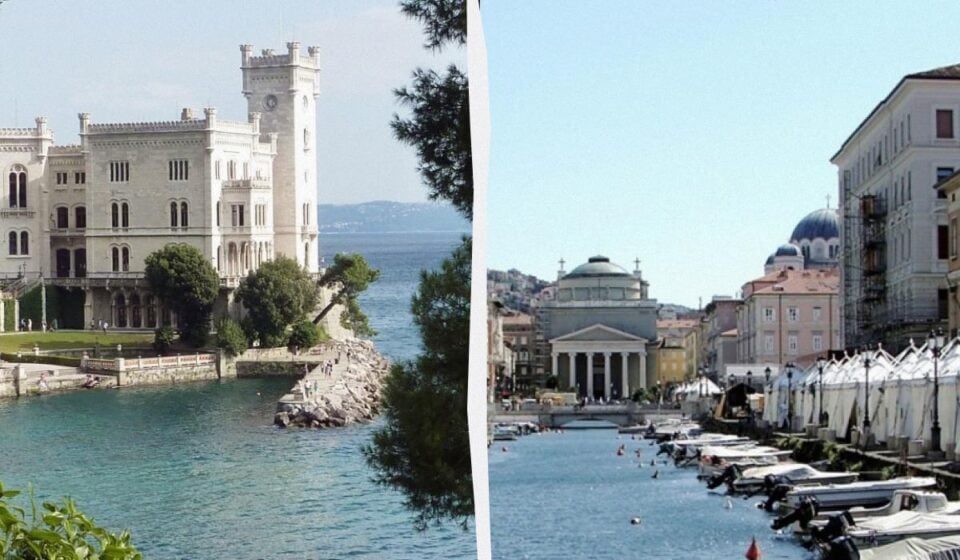
This city has existed in a different historical context than the rest of Italy for a long time, and this has left its mark on it.
Italy is undoubtedly one of the most interesting and diverse tourist destinations. It offers opportunities for skiing and sunbathing on its beaches, exploring its 2,000-year-old historical heritage, and indulging in its unique culinary traditions. The list goes on and on.
An American woman named Kat Smith, who has been traveling the world for years and has explored Italy from top to bottom, shared an underrated destination that she loves to return to in a comment for Mirror.
“I’ve traveled from the southern tip of Puglia to the northern border with Austria, making many stops throughout the country and even in Sardinia. One of my favorite cities is Trieste. Although Trieste is still relatively unknown outside of Italy, it is gradually starting to come out of its shell and gain the recognition it deserves,” said Kat.
Trieste is a city in northeastern Italy, on the very border with the former Yugoslav Republic of Slovenia. Trieste’s closest famous “neighbor” is the tourist-filled city of Venice.
Trieste is a relatively small city, with a population of around 200,000. However, Kat believes that tourists often underestimate it.
“From the architecture to the food and even the local dialect, Trieste is unlike any other city in Italy. Here, wandering through the streets, you’ll feel closer to Vienna than to Rome. In the bakeries, Sacher tarts stand side by side with typical croissants (known as “brioche” here), and goulash is often served alongside pasta on the menu,” the traveler shares.
According to the American woman, locals, especially the older generation, tend to emphasize that they are first Triestines and only then Italians. This is a legacy of the short-lived Free State of Trieste after World War II.
“Trieste is built around the water, and that’s what I really love about living here. No matter the season, you’ll find people flocking to the sea or the coast for the daily ritual of watching the sunset over the Adriatic. It seems like everyone who lives here has a connection to the water,” the traveler shared.
The city’s architecture is more reminiscent of Austria than of Venice or Rome, which is also a result of the city’s long-standing association with the Austro-Hungarian Empire. This is also the origin of the so-called “osmitza” culture, which refers to the temporary rural tavern-fair that operates for several weeks each year. Farmers sell their own produce, including wine, ham, sausages, cheese, eggs, and other local products. Trieste has adopted this tradition from its Slovenian neighbors, with whom it once shared a common state.
“The culture of Ossi comes to life in the summer and spring, when numerous “restorantes” specializing in farm-fresh produce open their doors with fresh meats, cheeses, and wines. In the winter, the city’s main square, Piazza Unità, is filled with a festive spirit, adorned with Christmas trees and lights,” says Kat.